
Buying property becomes much easier when you understand the paperwork. Property File vs Plot vs Registry in Pakistan is an important comparison every buyer should understand. Knowing these differences helps you choose the right investment, verify ownership, and purchase property with confidence.
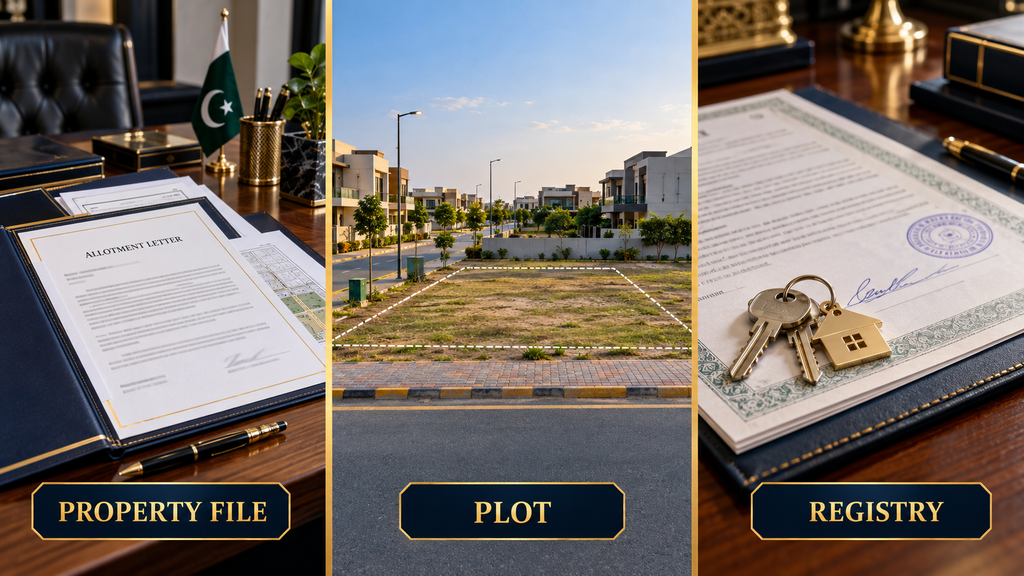
- Property File: A booking or allotment document that may represent a future plot.
- Plot: A specific piece of land with an identified location and plot number.
- Registry: A registered legal document recording a property transfer.
- Possession: The stage when a buyer receives physical control of the property.
- Best Choice: For building a home, a verified possession-ready plot with proper ownership documents is often the most practical option.
Each option serves a different purpose. Your budget, plans, and timeline will help you make a smart choice.
What Are Property Files in Pakistan?
A property file is a document issued by a housing society or developer. It records a buyer’s booking or allotment rights.
In many housing projects, developers offer files before assigning specific plots. Buyers can secure an early position through a booking payment or installment plan.
For example, you might purchase a 5 Marla residential file in a developing housing society.
Your file confirms your booking rights under the society’s terms. However, the exact plot location may only become available after balloting.
Types of Property Files
1. Registration File
This is usually the first booking stage. It records your application and initial payment.
2. Allocation File
The society confirms an allocation, often for a specific plot size or category. The exact location may still be pending.
3. Balloted File
Balloting assigns a plot number through the society’s allocation process. Buyers can then identify their assigned location on the approved layout plan.
The terms can differ between housing societies. Always confirm what your specific file represents.
What Is a Plot in Pakistan?
A plot is a defined piece of land that can be identified on a map and, when marked, on the ground.
Unlike an unballoted file, an allotted plot normally has a plot number, block, and stated dimensions.
For example, a 5 Marla plot in New City Phase 2, Wah Cantt, may have an assigned number and location.
This makes it easier to inspect the surroundings and compare nearby properties.
What Is the Difference Between an Allotted Plot and a Possession Plot?
An allotted plot has an assigned location, but development may still be underway.
A possession plot has been formally handed over to its owner.
For buyers planning construction, possession-ready plots offer a convenient starting point.
You should also confirm construction permission, access roads, utility availability, and outstanding society charges.
To explore local opportunities, view Kohistan Enclave properties in Wah Cantt.
What Is Property Registry in Pakistan?
Property registry is the official registration of a legal document, usually a sale deed, relating to a property transfer.
A registered sale deed records important details, including the buyer, seller, property description, and transaction.
It provides valuable documentary evidence of a transaction and supports the buyer’s ownership claim.
However, registration alone does not guarantee that every ownership claim is valid. Checking the seller’s legal title remains essential.
How Does Property Registry Work?
The usual process for property covered by the land registration system includes:
- Verify ownership: Check the seller’s documents and land records.
- Prepare the sale deed: Include correct personal and property details.
- Pay applicable charges: Complete the required stamp duty, taxes, and registration fees.
- Register the deed: Complete the process with the relevant registration authority.
- Update land records: Apply for Intiqal where required and confirm the updated ownership entry.
The exact procedure depends on the province and property’s legal status.
Housing society transfers may follow a separate process. A society transfer letter should not automatically be treated as a registered sale deed.
What Is the Difference Between Registry, Intiqal and Fard?
These three terms are important when understanding property ownership in Pakistan.
| Document | Simple Meaning | Main Purpose |
| Registry | Registered property transfer document | Records the legal transaction |
| Intiqal | Mutation of land records | Updates ownership entries |
| Fard | Official land record extract | Shows recorded ownership and land details |
Registry documents the property transfer.
Intiqal updates the relevant revenue records after a sale, inheritance, or another recognized transaction.
Fard provides an official extract of recorded land information.
Together, these documents help buyers understand and verify the property’s legal history.
For properties managed through housing society systems, the applicable records and transfer methods may differ.
Property File vs Plot vs Registry: What Is the Difference?
Understanding these differences makes comparing property options much simpler.
| Feature | Property File | Allotted Plot | Registered Property |
| Specific location | May be pending | Usually assigned | Identified |
| Plot number | May be pending | Available | Recorded in documents |
| Physical possession | Usually pending | Depends on development | Must be checked separately |
| Main document | Booking or allotment file | Allotment or transfer letter | Registered deed |
| Main purpose | Early booking or investment | Buying identified land | Documenting legal transfer |
A registered property can also be a plot. Registry describes a legal process, not a separate type of land.
This distinction helps buyers compare options correctly.
Which Is Better: Buying a Property File or a Plot?
Both options can suit different investment goals.
When Should You Consider a Property File?
Files may suit buyers who:
- Prefer an installment-based payment plan.
- Have a longer investment timeline.
- Can comfortably wait for balloting and development.
- Have verified the housing society’s approval and project details.
Early bookings can offer attractive entry prices. A reliable developer, proper approvals, and clear terms make the decision more informed.
When Should You Consider an Allotted Plot?
An allotted plot may suit buyers who want:
- A clearly identified property location.
- Better visibility of nearby development.
- Easier comparison of location-based prices.
- A clearer path toward future possession.
For family homes, possession-ready land can be especially helpful.
How Can You Verify a Property File or Plot Before Buying?
A few simple checks can give you greater confidence in your purchase.
1. Confirm Housing Society Approval
Check the project’s approval and NOC status with the relevant authority.
An NOC is a No Objection Certificate issued for an approved purpose.
Also confirm that your chosen block is included in the approved layout.
2. Verify the Seller’s Ownership
Match the seller’s CNIC with the original allotment, transfer, or ownership documents.
For revenue-record properties, check the latest Fard and ownership history through the relevant land record office.
3. Check Payment Records
Request an updated payment statement showing installments, development charges, and transfer fees.
Clear financial records make budgeting much easier.
4. Visit the Property
For an allotted plot, confirm its location and boundaries against the society’s official map.
You can also inspect road access and nearby development.
5. Complete the Official Transfer
Make payments through documented, verifiable channels and obtain proper receipts.
Complete the transfer through the society or registration authority, as applicable.
These steps support a smoother buying experience and more reliable property records.
Understanding Property Prices: A Practical Example
Suppose a buyer is comparing two hypothetical 5 Marla options.
- Option A: Property file priced at PKR 20 lakh.
- Option B: Allotted plot priced at PKR 30 lakh.
The file requires a lower initial investment. However, balloting, development, and possession may take additional time.
The allotted plot costs more but offers an identified location.
Now consider development charges, outstanding installments, transfer fees, and taxes.
These costs affect the total purchase budget.
The smarter choice depends on your timeline, financial comfort, and property goals.
What Should Property Buyers Know in Wah Cantt?
Wah Cantt offers residential and commercial property options for families and investors.
Areas around New City Phase 2 and nearby housing developments attract buyers with different budgets and requirements.
Before purchasing, check the relevant society’s transfer procedures, development status, and available amenities.
At GlowStar Real Estate, we encourage buyers to understand the documentation and visit the property before making their final decision.
If your priority is a completed residence, explore ready-to-move homes in New City Phase 2.
A property that matches your plans can provide both everyday comfort and long-term value.
Frequently Asked Questions
1. Is a property file proof of ownership in Pakistan?
A property file usually confirms booking or allotment rights under a developer’s terms. It is not automatically proof of registered land ownership. Verify its status with the issuing society.
2. Can I sell my property file before balloting?
Many societies allow file transfers before balloting. Transfer rules and fees vary, so confirm the society’s official procedure before selling.
3. Is registry necessary when buying a plot?
Registry is required for transactions covered by compulsory registration laws. Some housing society properties use separate allotment and transfer procedures. A qualified property lawyer can confirm the appropriate process.
4. Can I build a house on an allotted plot?
You can generally begin construction after receiving possession and the required building approval. Confirm the housing society’s current construction rules first.
Final Thoughts
Understanding property files in Pakistan helps you make better property decisions.
Files can support early investment plans, while allotted plots offer clearer locations. Registry, Intiqal, and ownership verification provide essential legal clarity.
The key is choosing a property that matches your budget, timeline, and future plans.
For guidance on residential plots, completed homes, and local investment opportunities, contact GlowStar Real Estate. Our team can help you explore suitable options and move forward with confidence.
SEO implementation: Three relevant internal links have been included naturally in the article, with no external website links. The article is written in a positive, beginner-friendly tone. The requested Google Cloud sentiment score has not been measured, so its numerical range cannot be guaranteed.